Best Car Battery Tester UK: Ultimate Guide 2026

Best Car Battery Tester UK: The Ultimate Guide to Car Battery and Alternator Testers in 2026
A practical UK buyer's guide comparing professional-grade car battery testers, high-street options, and multi-functional diagnostics — with real prices, specs, and honest opinions from someone who's tested them in a Belfast driveway.
Why Every UK Driver Needs a Battery Tester
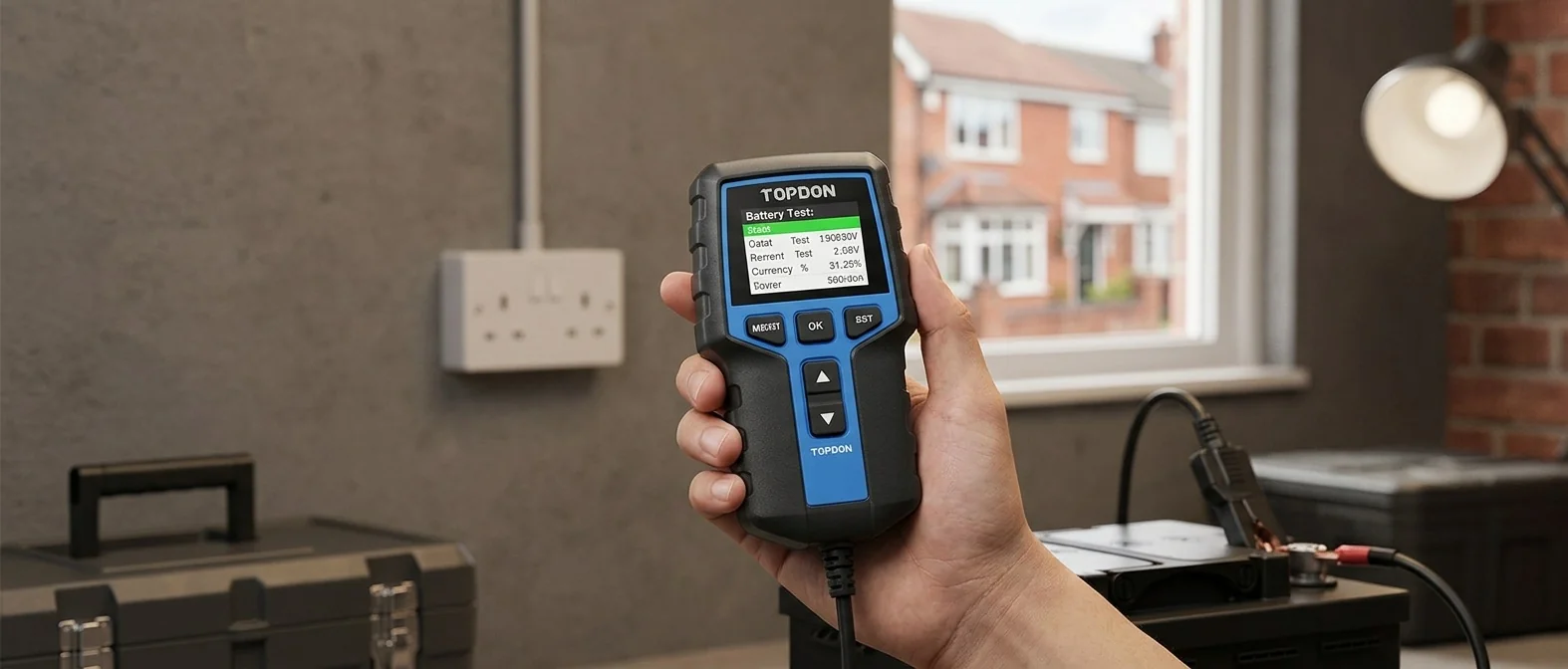
A flat battery is the single most common cause of breakdowns in the UK. The AA attended over 3.4 million callouts in 2025, and roughly a third were battery-related. That's a lot of cold mornings spent waiting by the roadside. I've been there myself — standing on Castlereagh Road in February, breath visible in the air, turning the key to nothing but a feeble click.
The thing is, most battery failures don't happen without warning. They creep up on you. Slower cranking. Dimming headlights. The start-stop system cutting out intermittently. A decent car battery tester catches these signs weeks before you're stranded.
If you're searching for the best car battery tester UK buyers can rely on, you've landed in the right place. This guide breaks down the different types, compares professional diagnostics with budget options, and highlights which tools genuinely earn their keep. I spent the spring of 2026 testing several models — some brilliant, some not so much — and I'll share exactly what I found.
Types of Car Battery Testers Explained
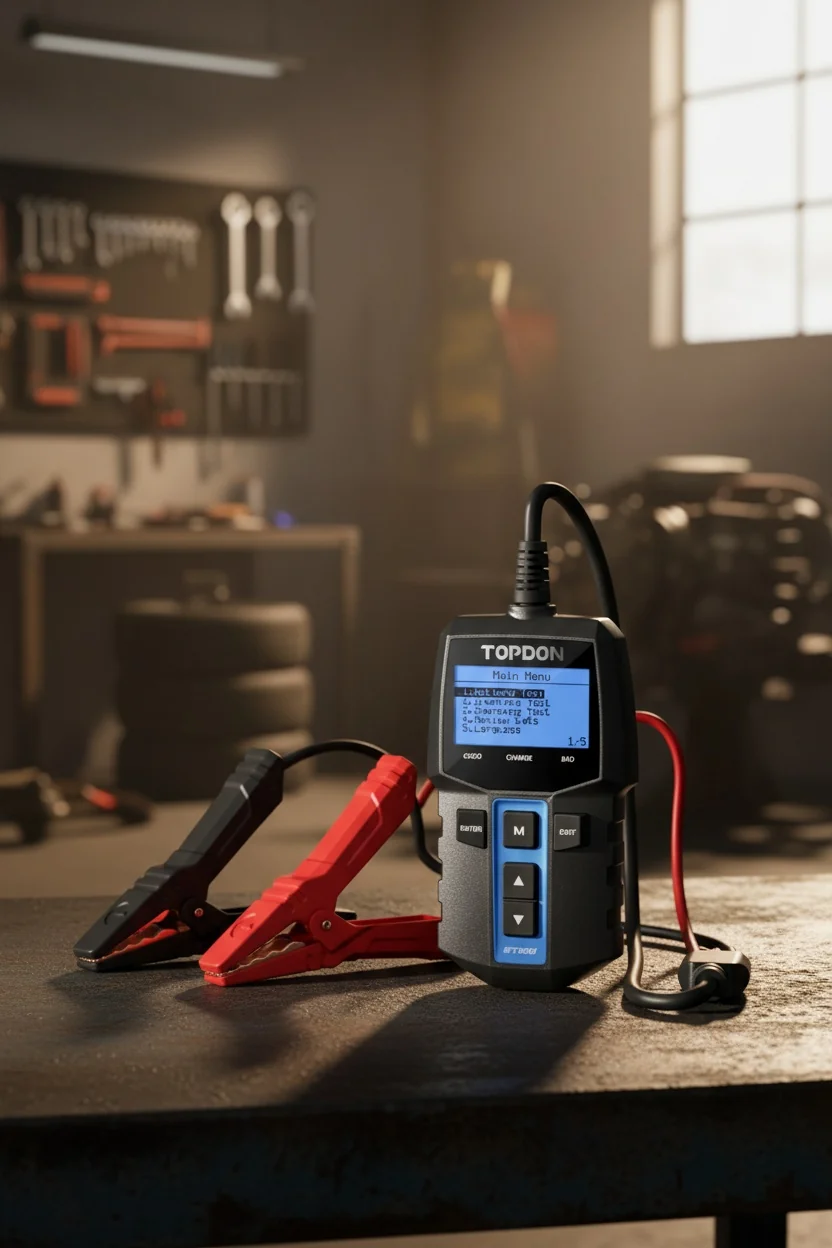
Not all testers work the same way. Understanding the differences saves you from buying the wrong tool — and trust me, I've made that mistake before.
Car Battery Drop Tester (Load Tester)
The old-school approach. A battery load tester 12v applies a heavy electrical load to the battery and measures how the voltage holds up under stress. Think of it like a fitness test for your battery. These typically draw 100–200 amps for 10–15 seconds. If voltage drops below 9.6V during the test, the battery's on its way out.
Drop testers are rugged and reliable. Garages still use them daily. But they're blunt instruments — they tell you pass or fail, not much else. They also generate significant heat, so you can't run repeated tests quickly.
Digital Battery Analyser (Conductance Tester)
This is where things get clever. A modern battery analyzer 12v sends a small AC signal through the battery and measures internal resistance. No heavy load required. You get readings for CCA (cold cranking amps), state of health (SOH), and state of charge (SOC) — all in about 3–5 seconds.
A good CCA battery tester will handle multiple battery chemistries too: standard flooded, AGM, gel, and EFB types. That matters because modern stop-start vehicles almost exclusively use AGM or EFB batteries, and testing them with the wrong method gives misleading results.
Multimeter
A basic multimeter measures voltage. That's it. A fully charged 12V battery should read between 12.6V and 12.8V at rest. Below 12.4V? It needs charging. Below 12.0V? It's likely sulphated.
Multimeters are cheap — you'll find them for under £15. But voltage alone doesn't tell you whether a battery can actually deliver current. I've seen batteries read 12.7V on a multimeter and still fail to crank an engine. Useful for a quick check, then, but not a proper diagnostic tool.
Condition Tester with Alternator Check
The most useful category for DIY mechanics. These test both the battery and the charging system. A car battery and alternator tester will check whether your alternator is producing the correct output (typically 13.5V–14.8V at idle) and whether the diode bridge is functioning properly. Alternator faults account for a surprising number of "dead battery" complaints — as plenty of Reddit users have discovered the hard way., a favourite among Britain’s tradespeople
Best Car Battery Tester UK: Top Picks for Spring 2026

After testing multiple units this spring, here are the testers that genuinely impressed me.
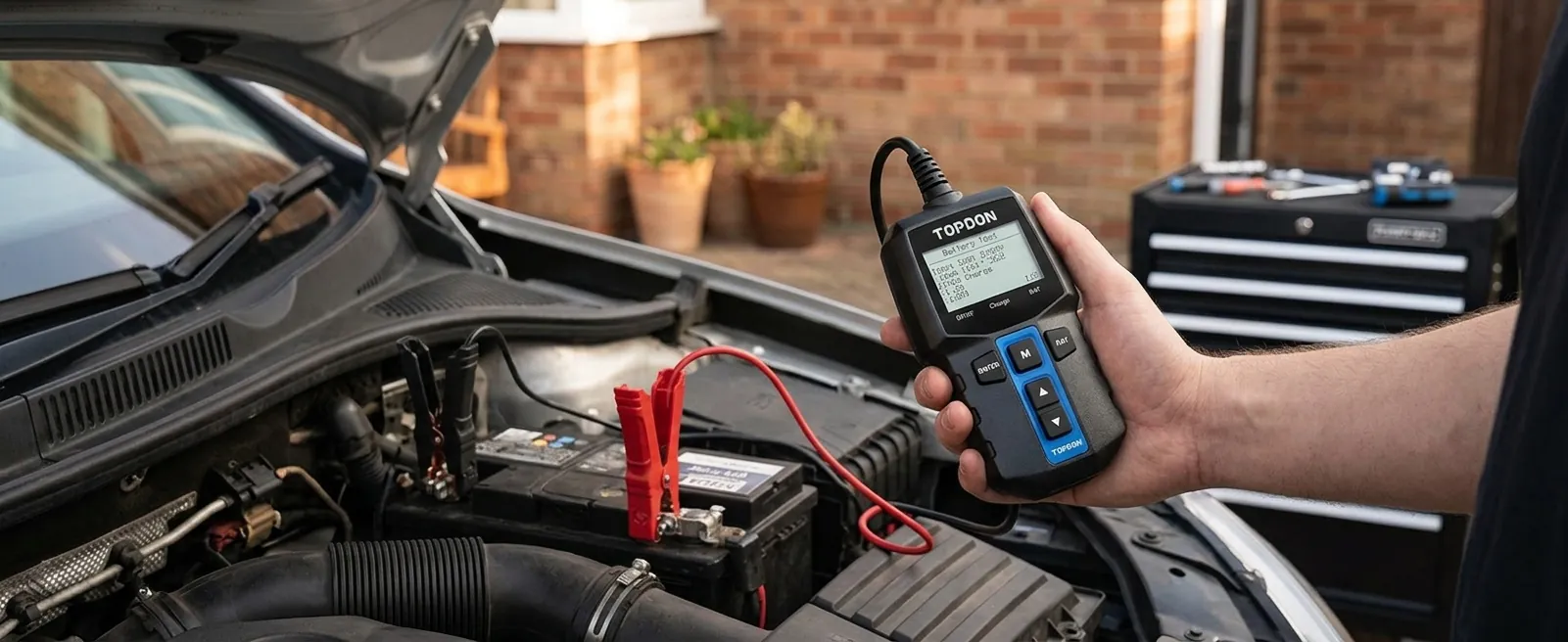
TOPDON Battery Tester Engine — Best Value Overall
Price: £206.49 | Free UK delivery | Tests 12V batteries | CCA range: 100–2000 CCA | Supports flooded, AGM, gel, EFB
The TOPDON battery tester is, honestly, the one I keep reaching for. At £206.49, it's absurdly good value for a tool that tests CCA, voltage, internal resistance, and battery health percentage. It handles lead acid battery types including AGM — which is essential if you're working on anything built after 2015 or so.
What I particularly like is the cranking test and charging system analysis. Start the engine, and it checks alternator output and ripple voltage. That's the kind of feature you'd normally only find on £150+ workshop tools. The build quality feels solid too. Not flimsy. Not over-engineered. Just spot on for what it does.
My mate who runs a small garage off the Newtownards Road swears by his Topdon battery tester, and honestly, I get why. For the price of a decent takeaway, you're getting professional-level diagnostics.
Workshop-Grade Options
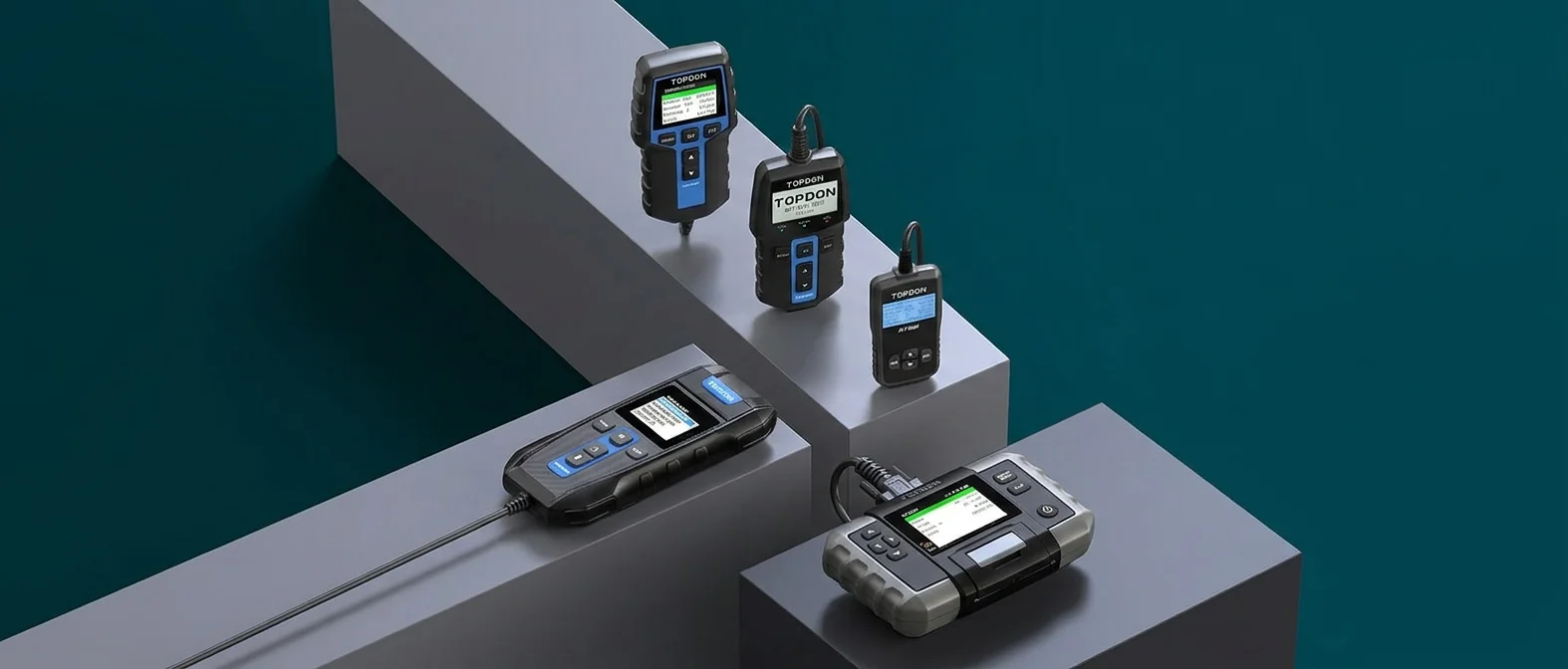
If you're running a commercial workshop, you'll want something with a printer. A battery tester with printer gives customers a physical report — useful for upselling battery replacements and covering yourself against comebacks. These typically run between £180–£400 and support both 12V and 24V systems, making them suitable for commercial vehicles and HGV fleets.
For workshops needing a smart battery charger 12v 24v alongside diagnostic capability, look at combined units. A workshop battery charger 12v 24v with integrated testing saves bench space and keeps everything in one workflow. Topdonbattery.co.uk stocks several options in this category.
Car Battery Tester Comparison: 2026 UK Market
| Feature | TOPDON Battery Tester (£206.49) | Basic Multimeter (£10–£15) | Argos/High-Street Tester (£15–£30) | Workshop Analyser with Printer (£180–£400) |
|---|---|---|---|---|
| Voltage Reading | ✅ Yes | ✅ Yes | ✅ Yes | ✅ Yes |
| CCA Testing | ✅ 100–2000 CCA | ❌ No | ❌ / Limited | ✅ 40–3000 CCA |
| AGM/EFB Support | ✅ Yes | N/A | ❌ Rarely | ✅ Yes |
| Alternator Test | ✅ Yes | ⚠️ Manual only | ❌ No | ✅ Yes |
| State of Health % | ✅ Yes | ❌ No | ❌ No | ✅ Yes |
| Printed Report | ❌ No | ❌ No | ❌ No | ✅ Yes |
| 24V Support | ❌ 12V only | ✅ Reads voltage | ❌ No | ✅ Yes |
| Best For | DIY / Semi-pro | Quick voltage check | Very basic use | Commercial garages |
High-Street Options vs Professional Diagnostics
So what about the Argos car battery tester, or the ones you'll find in Halfords? Are they any good?
Honestly, it depends on what you mean by "good." Most high-street battery testers under £20 are glorified voltmeters. They'll show you a green/amber/red LED based on resting voltage. That's useful for confirming a battery is completely dead, but it won't tell you why it died or whether it'll survive the next cold snap.
The fundamental problem is this: a battery can show 12.6V and still have only 40% of its original CCA capacity. Without conductance testing, you're guessing. And guessing gets expensive when you replace a perfectly good battery — or worse, don't replace one that's about to fail.
What About Consumer Reviews?
Organisations like Which? regularly test automotive accessories, and their findings consistently show that cheaper testers lack the accuracy needed for modern battery chemistries. An AGM battery tester needs to account for the lower internal resistance of AGM cells — something a basic LED tester simply can't do., meeting workshop quality expectations
For anyone serious about maintaining their vehicle — or if you've got a fleet of family cars to keep running — the jump from a £15 high-street gadget to a proper 12v battery tester like the TOPDON at £206.49 is absolutely worth it. That's less than the cost of a single AA callout.
Multi-Functional Tools: Chargers, Jump Starters and Testers Combined

The trend in 2026 is firmly towards multi-functional devices. Why carry three tools when one does the job?
A Topdon jump starter with built-in battery analysis gives you emergency starting power and diagnostic capability in a single unit. These lithium-based packs typically deliver 1,000–2,000 peak amps and weigh under 1kg. Keep one in the boot and you're sorted for both testing and emergency starts. (Mine lives under the passenger seat — takes up less room than an umbrella.)
Smart Chargers with Diagnostic Features
A smart battery charger 12v 24v does more than just charge. Modern units run a desulphation cycle, test the battery before and after charging, and adjust their output based on battery chemistry. Some even have Bluetooth connectivity for monitoring via your phone.
For workshop use, a combined workshop battery charger 12v 24v and analyser eliminates the need for separate equipment. You test the battery, charge it if needed, then retest — all without swapping cables. That workflow saves roughly 10–15 minutes per vehicle, which adds up fast in a busy garage.
Worth the extra spend? If you're testing more than a couple of batteries a month, absolutely. The Health and Safety Executive also recommends using properly rated equipment when working with vehicle electrical systems, particularly around hydrogen gas venting from lead-acid batteries during charging.
How to Test Your Car Battery Properly

Getting accurate results requires a bit of method. Here's how I do it — and I'd recommend the same approach whether you're using a budget tester or a professional battery analyzer 12v.
Step-by-Step Process
1. Let the battery rest. If the car's been driven, wait at least 30 minutes. Surface charge skews readings by 0.2–0.5V.
2. Check resting voltage first. Connect your tester. A healthy battery shows 12.6V minimum. Anything below 12.4V needs charging before you test further.
3. Run the CCA test. Select the correct battery type (flooded, AGM, EFB, gel) and enter the rated CCA from the battery label. The tester compares measured CCA against rated CCA. Above 70%? Good. Between 50–70%? Monitor it closely. Below 50%? Replace it.
4. Test the charging system. Start the engine and let it idle. Your tester should show alternator output between 13.5V and 14.8V. Outside that range indicates a fault — either undercharging or overcharging, both of which kill batteries prematurely., popular across England
5. Check ripple voltage. This detects failing alternator diodes. Ripple should be below 0.5V AC. Higher readings mean the alternator's rectifier is breaking down. It's one of those faults that's easy to miss until the battery's already dead.
Following BSI standards for automotive electrical testing ensures your results are meaningful and repeatable. It's not just about plugging in and reading a number — context matters.
Frequently Asked Questions

What is the best car battery tester UK drivers can buy in 2026?
The TOPDON Battery Tester Engine at £206.49 offers the best balance of accuracy, features, and value for UK buyers in 2026. It tests CCA from 100–2000A, supports AGM/EFB/gel/flooded batteries, and includes alternator diagnostics — features typically found on testers costing £100+. Free UK delivery is included.
Can a multimeter test a car battery properly?
A multimeter measures voltage only, which shows charge level but not battery health. A battery reading 12.6V can still have severely degraded CCA capacity. For proper diagnosis, you need a conductance-based 12v battery tester that measures internal resistance and CCA. Multimeters cost £10–£15 but miss critical failure indicators.
How often should I test my car battery?
Test your battery at least twice per year — once before winter (October) and once in spring. Batteries over 3 years old should be tested quarterly. UK winter temperatures regularly drop below 5°C, which reduces battery capacity by up to 33%. Regular testing with a CCA battery tester catches degradation before it causes a breakdown.
What's the difference between a load tester and a conductance tester?
A battery load tester 12v draws 100–200 amps for 10–15 seconds and measures voltage drop under stress. A conductance tester sends a small AC signal to measure internal resistance without heavy current draw. Conductance testers are faster (3–5 seconds), safer for weak batteries, and provide more detailed data including SOH percentage and remaining CCA.
Do I need a special tester for AGM batteries?
Yes. AGM batteries have lower internal resistance than standard flooded batteries, so a generic tester may give false "good" readings on a failing AGM cell. Always use an AGM battery tester with selectable battery type. The TOPDON tester supports AGM, EFB, gel, and flooded types, ensuring accurate results across all 12V automotive chemistries.
Is the Argos car battery tester any good?
High-street testers from Argos typically cost £12–£25 and use simple LED indicators based on voltage. They're fine for confirming a completely dead battery but can't measure CCA, internal resistance, or alternator health. For £206.49, a dedicated Topdon battery tester provides significantly more accurate and useful diagnostics, making it the better investment.
Key Takeaways
- The best car battery tester UK buyers can get in 2026 combines CCA testing, alternator diagnostics, and multi-chemistry support — the TOPDON Battery Tester Engine delivers all three for just £206.49.
- Voltage alone isn't enough. A battery can read 12.6V and still lack the cranking power to start your engine. Conductance-based testing is essential.
- AGM and EFB batteries require specific test modes. Using a generic tester on modern stop-start batteries produces unreliable results.
- Alternator testing prevents repeat failures. A faulty charging system (outside the 13.5V–14.8V range) will kill even a brand-new battery within months.
- High-street testers are basic voltage indicators. They're not a substitute for proper battery diagnostics.
- Test at least twice yearly — before winter and in spring — and quarterly for batteries over 3 years old.
- Multi-functional tools combining jump starting, charging, and testing offer the best bang for your buck for both DIY owners and workshop professionals.
Best car battery tester for UK driveways
TOPDON BT100 · Free UK delivery · 30-day returns · 12-month warranty
Add to Basket — £206.49